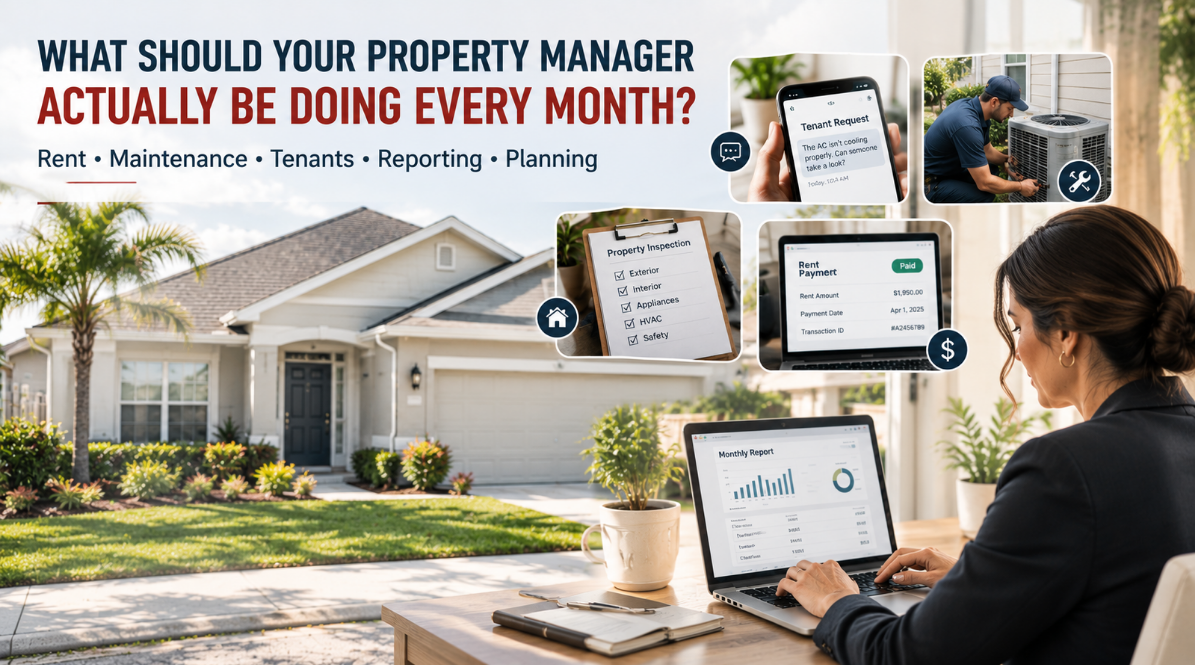
Hiring a property manager should give you more than someone to collect rent when it is due. Your manager should be watching the property, responding to tenant concerns, tracking expenses, handling maintenance, monitoring lease dates, and keeping you informed about issues that can affect your investment.
Florida law requires landlords to maintain rental properties and keep certain structural and plumbing components in good repair. A professional manager turns those responsibilities into an ongoing process, with regular follow-up and clear reporting. Here is what landlords should reasonably expect to see each month.
Keep Rent Collection and Finances on Track
Rent collection should be followed closely each month, with late payments addressed promptly and every transaction recorded accurately. Florida law states that, unless otherwise agreed, rent is payable without demand or notice at the beginning of each payment period.
Your manager should also keep the property's financial records organized, reconcile transactions, and review charges before they reach your monthly statement.
Monthly Financial Reporting
Your monthly reporting should give you a clear picture of where the property's money came from and where it went.
What to Review | What the Manager Should Track | Why It Matters to the Owner |
Income & Expense Statement | Rent received, management fees, maintenance charges, vendor costs, and other property expenses. | Shows the property's actual monthly cash flow and helps identify unexpected spending. |
Rent Roll Update | Current lease dates, monthly rent, payment status, and outstanding balances. | Makes it easy to see whether the property is producing the expected rental income. |
Reconciliation | Match recorded income and expenses against property account transactions and maintain the appropriate reserve balance. | Helps catch missing, duplicated, or incorrectly recorded transactions before they become larger accounting problems. |
Outstanding Items | Unpaid rent, pending vendor invoices, unresolved repairs, or owner approvals still needed. | Shows what still needs attention instead of making the owner piece together information from separate records. |
Stay on Top of Maintenance and Property Condition
Maintenance should be tracked from the first tenant request through completion.
Your manager should:
Respond to tenant maintenance requests.
Determine whether an issue is routine, urgent, or an emergency.
Dispatch the appropriate vendor.
Follow up until the work is completed.
Review the completed work and invoice.
Watch for recurring problems that could indicate a larger repair.
Keep records of what was reported, who handled it, what was repaired, and what it cost.
Florida law requires landlords to follow applicable building, housing, and health codes and, where those codes do not apply, maintain specified structural components and plumbing in reasonable working condition.
Keep Tenant Communication Moving
Your property manager should handle routine tenant communication so you are not answering maintenance questions or chasing updates yourself. That includes responding to requests, following up when a repair is still pending, documenting important conversations, and addressing lease-related concerns consistently.
A manager should also notice recurring complaints that may point to a property issue and bring decisions requiring your approval to your attention. Wilson Management Group (WMG) manages these day-to-day communications for landlords, keeping tenant requests, maintenance concerns, and lease matters organized while giving owners a clear picture of anything that needs their involvement.
Watch Lease Dates and Upcoming Changes
Lease dates should be tracked well in advance to meet Florida's strict statutory notice deadlines. As a renewal approaches, your manager should review current comparable rents, discuss the renewal with you, and give the tenant appropriate notice based on the lease and applicable Florida requirements, which allow up to a 60-day notice window for fixed-term leases.
If the tenant is leaving, there should already be a plan for repairs, cleaning, photography, marketing, and showings. Accurate records and timely communication are critical to avoiding automatic lease rollovers under Florida law.
Give Owners Clear Monthly Reporting
A monthly report should make the property's financial and operating picture easy to understand.
It should answer:
Was rent collected?
What was spent?
Which repairs were completed?
Are there unresolved maintenance issues, or any other unusual charges?
Are there upcoming lease expirations or vacancies?
Are there unusual expenses?
Does the owner need to make a decision?
Florida law also requires licensed real estate brokers to retain records related to rental property management agreements and leases for at least five years.
Keep an Eye on the Property's Market Position
A proactive PM tracks Orlando’s rental trends and adjusts strategy. For example, Orlando’s median rent was about $1,906 in late 2026 and asking rents had cooled approx 3% year-over-year.
DoorVault reports a tight market with only 5% to 7% single-family vacancy and about 44 days average market time. Your manager should check comparable rents monthly.
If your property lags, they’ll advise a rent change or improvements. This ensures you’re not stuck at an unrealistically high rent; remember, renters compare you to every nearby listing.
Look Ahead Instead of Waiting for Problems
Finally, your PM looks out for future needs. They may flag major upcoming costs like HVAC replacement or roofing and suggest budgeting accordingly. They’ll prepare 1099s and other tax paperwork each year.
If your property becomes vacant, they should act fast: relisting it, updating photography, and managing showings to minimize downtime. Throughout, a quality manager communicates with you to align on goals and keep the property profitable.
When Should You Hire a Property Manager Instead of Self-Managing?
You should hire a property manager when your portfolio expands, you live far from your rentals, or managing tenant relations, local compliance, and 24/7 maintenance becomes overwhelming. If you lack the time for extensive applicant screening or legal oversight, outsourcing is critical.
Established firms like Wilson Management Group emphasize that full-service management bridges this gap, protecting your asset's value through professional vendor networks and streamlined operations, allowing you to treat your real estate as a true passive investment.
Frequently Asked Questions
Q1- What are the essential monthly tasks a property manager should handle?
A property manager must handle rent collection, legal late fee enforcement, and prompt owner disbursements. They should also audit monthly financial reports, resolve tenant inquiries, track upcoming lease renewals, and oversee ongoing maintenance or preventative property inspections.
Q2- What monthly financial reports should a property manager provide to landlords?
Landlords should receive a detailed income and expense statement showing monthly cash flow. Additionally, the manager must provide a current rent roll tracking tenant payment statuses and a bank reconciliation statement detailing the property's reserve fund balance. WMG provides detailed financial reporting to stay informed about your investment.
Q3- How do property managers handle routine maintenance requests each month?
Managers track routine requests via an online tenant portal to log work orders chronologically. They dispatch pre-vetted contractors, verify completed work quality, and handle vendor payouts based on owner work approvals and available property funds contributed by owners.
Q4- What communication frequency should I expect from my property manager?
Expect updates at least once monthly alongside your financial statements. However, property managers should contact you immediately regarding emergencies, critical maintenance costs exceeding your pre-approved threshold, lease violations, or immediate tenant move-out notices.
Q5- What are the best practices for monthly rent collection and delinquency management.
Utilize automated online portals to ensure prompt collection and document payment histories. If a delinquency occurs, immediately issue a formal pay-or-quit notice the day after grace periods expire, while strictly following local eviction and compliance regulations.