Good tenants are your best asset. When they leave, the costs add up quickly from lost rent and marketing expenses to cleaning and repairs.
Industry estimates place the average turnover cost between $2,000 and $5,000 per unit.
In a competitive rental market like Orlando, every vacancy affects performance. Whether you're an unintended landlord, an intentional investor, or considering your first rental property, understanding why good tenants leave is essential.
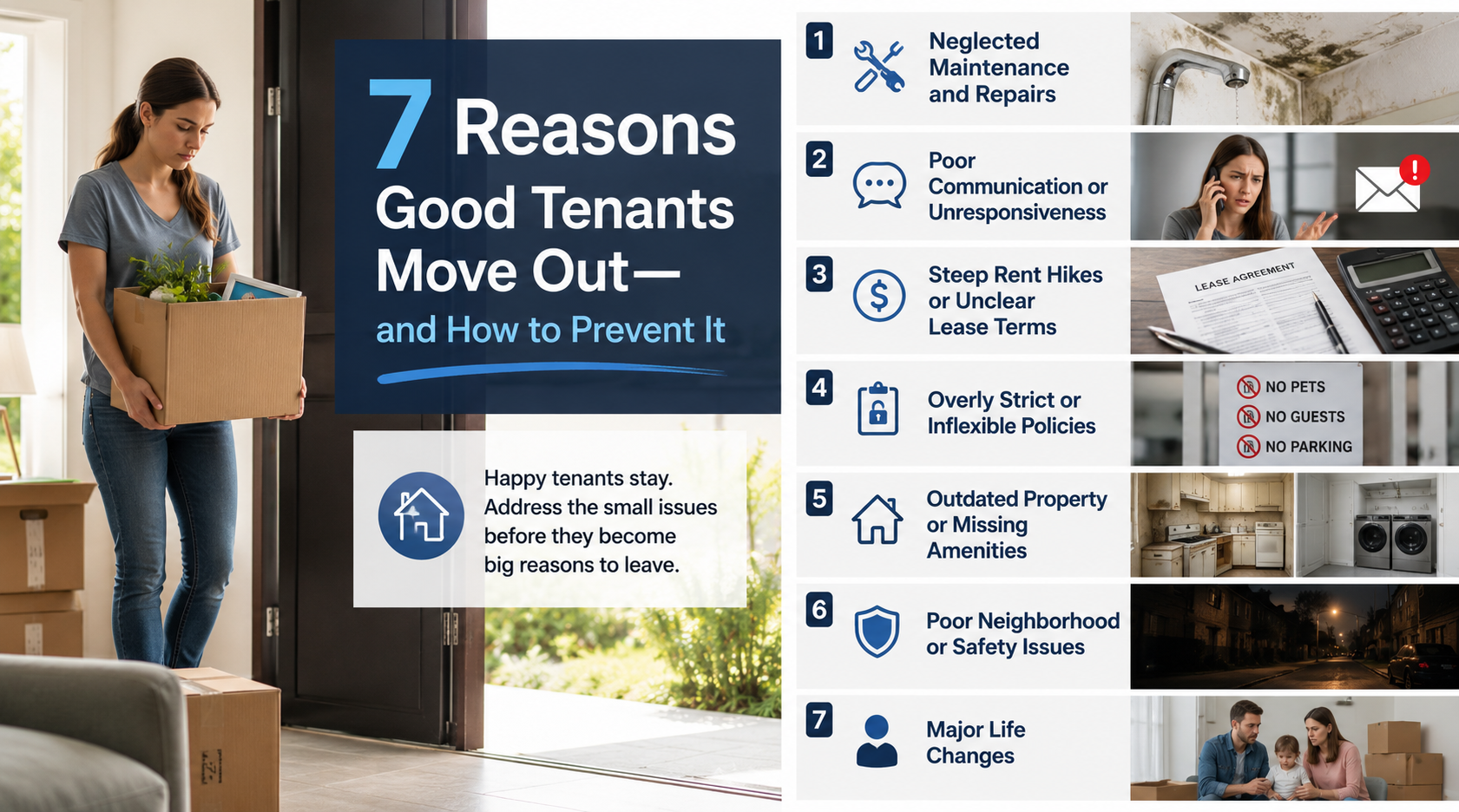
Here are seven common reasons tenants move out and what you can do to prevent them from leaving.
Reason 1: Neglected Maintenance and Repairs
Good tenants expect a safe, functioning home. If you ignore leaky faucets or half broken appliances, they feel neglected. Over time, maintenance requests languish and renters believe their comfort isn’t your priority. They start looking elsewhere when small issues pile up.
Impact: Deferred maintenance often leads to bigger failures like a clogged drain can lead to mold or leaks. Fixing problems early saves money and keeps tenants happy.
Prevention: Respond immediately. Acknowledge every request within hours and give a realistic fix date. Set up a 24/7 hotline or portal for emergencies. Schedule biannual inspections to catch wear-and-tear early as WMG advises regarding proactive maintenance. Keeping the unit well maintained and clean shows tenants you value them.
Reason 2: Poor Communication or Unresponsiveness
Tenants want to feel like respected partners, not just rent payments. Unanswered calls, unreturned emails, and a generally unresponsive landlord can make them feel alienated.
Many landlords assume no news is good news, but in reality it often means tenants have given up and are quietly browsing for alternatives.
Impact: When tenants stop reporting minor issues or become hard to reach, it’s often a red flag they’re ready to leave.
Prevention: Stay in touch. Use a dedicated communication system or tenant portal for text or email so conversations don't get lost. Set clear boundaries like office hours for non-emergencies but reply to all messages promptly. Proactive contact; even a monthly check-in call or a short satisfaction survey, lets tenants know you care.
Reason 3: Steep Rent Hikes or Unclear Lease Terms
While adjusting rent to match market rates is necessary, hiking the price significantly above market value or springing unexpected jumps on tenants without prior notice, will quickly prompt them to leave.
Impact: Data suggest keeping rent changes moderate; a moderate renewal rate for a loyal tenant avoids turnover. Meanwhile, a unit sitting vacant for 2 more weeks can cost more than any small rent increase would earn.
Prevention: Tie rent to market data. Before renewal, research comparable local rents. WMG’s Orlando available property listings are a great reference. Give ample notice of any increase and explain it with facts like rising taxes, insurance, etc. When possible, start with smaller increases over time. Offering a slight rent concession even 1% to 2% off to long-term tenants can pay dividends by keeping them in place.
Reason 4: Overly Strict or Inflexible Policies
Stringent lease terms for example, suddenly banning pets or imposing hefty new fees, can force tenants out. A tenant with a dog may find a pet-friendly apartment next door and leave rather than battle deposit rules. Likewise, if you stiffen a deposit mid-lease, tenants feel trapped.
Impact: Policy shifts are frustrating. Good tenants don’t like surprises or feeling locked in. It’s one reason tenants cite on move-out. Once they’ve mentally committed to leaving, it’s hard to change course.
Prevention: Keep leases flexible. Allow pets with reasonable deposits or honor existing pet terms through renewal. Make lease terms clear and stable, explain any changes well before renewal time. A small gesture like accepting a pet deposit in installments can keep a good tenant who otherwise might move for their pet’s sake.
Reason 5: Outdated Property or Missing Amenities
Tenants increasingly expect modern, energy-efficient standards. If your property remains outdated compared to nearby rental options, tenants may jump ship for a better deal.
Impact: An outdated Orlando rental sits vacant longer and forces price cuts, directly slicing your Net Operating Income.
Prevention: Perform periodic property upgrades. Simple, cost-effective improvements like fresh paint, updated fixtures, or energy-efficient appliances can boost tenant retention.
Reason 6: Poor Neighborhood or Safety Issues
A peaceful environment is highly valued. Continuous noise, neglected shared spaces, or disruptive behavior from neighbors can force good tenants out.
Impact: When the environment turns sour, the blame often lands on you, the landlord. Even if it’s not your fault, tenants see it as part of renting that home. Excessive noise, fights, or a poorly maintained neighboring units will make your tenant look elsewhere.
Prevention: Monitor surroundings. If one tenant repeatedly causes issues, use your lease’s nuisance clause to address it. Improve security by adding lights or cameras. Sometimes even simple noise-dampening fixes like weather-strip or insulation can make a difference.
Solution: Sometimes an investment property that was a great rental in the beginning, can find itself in a situation where the neighborhood and/or surrounding area has experienced a significant cultural and economic shift. When this happens, a wise landlord can consider a 1031 exchange option, which would allow the sale of that property and shift the proceeds into another property in a different area that is now a better fit for that landlord's investment goals.
Reason 7: Major Life Changes
Sometimes tenants outgrow a space due to marriage, growing families, job relocations, or the need to downsize. While out of your control, these departures are often manageable.
Impact: Major life changes like job relocation to the space coast or buying an Orlando starter home are inevitable and out of your control. When these happen, maintain a flawless relationship to secure a clean move-out, a positive review, and a steady stream of word-of-mouth referrals.
Prevention: Maintain a positive relationship so they provide ample notice. If you own a larger portfolio of properties, offer to transfer them to a different, more suitable unit.
Final Thoughts
Tenant retention rarely comes down to one major issue. More often, it reflects the overall rental experience.
Landlords who communicate well, maintain their properties, and address concerns consistently are far more likely to keep good tenants longer and protect the long-term performance of their investment.
Frequently Asked Questions
Q1: Why do reliable tenants typically decide to move out of rental properties?
Reliable tenants often leave due to slow maintenance, poor property layout, unresolved neighbor disputes, or personal financial challenges.
Q2: How can landlords use tenant screening services to reduce tenant turnover?
Quality screening helps match the property with tenants who have stable income, positive rental history, and realistic long-term housing expectations, reducing future turnover.
Q3: What are effective tenant retention strategies offered by property management platforms?
Fast maintenance response, satisfaction surveying, online service portals, transparent lease renewals, and data-driven rent adjustments consistently improve tenant retention.
Q4: How do rent payment platforms influence tenant satisfaction and lease renewal rates?
Convenient online payment systems reduce friction, simplify recordkeeping, improve communication, and create a smoother rental experience that supports tenant satisfaction.
Q5: What are the best strategies to improve landlord communication and tenant satisfaction?
Transparent communication, clear expectations, empathetic conflict resolution, and regular building updates.